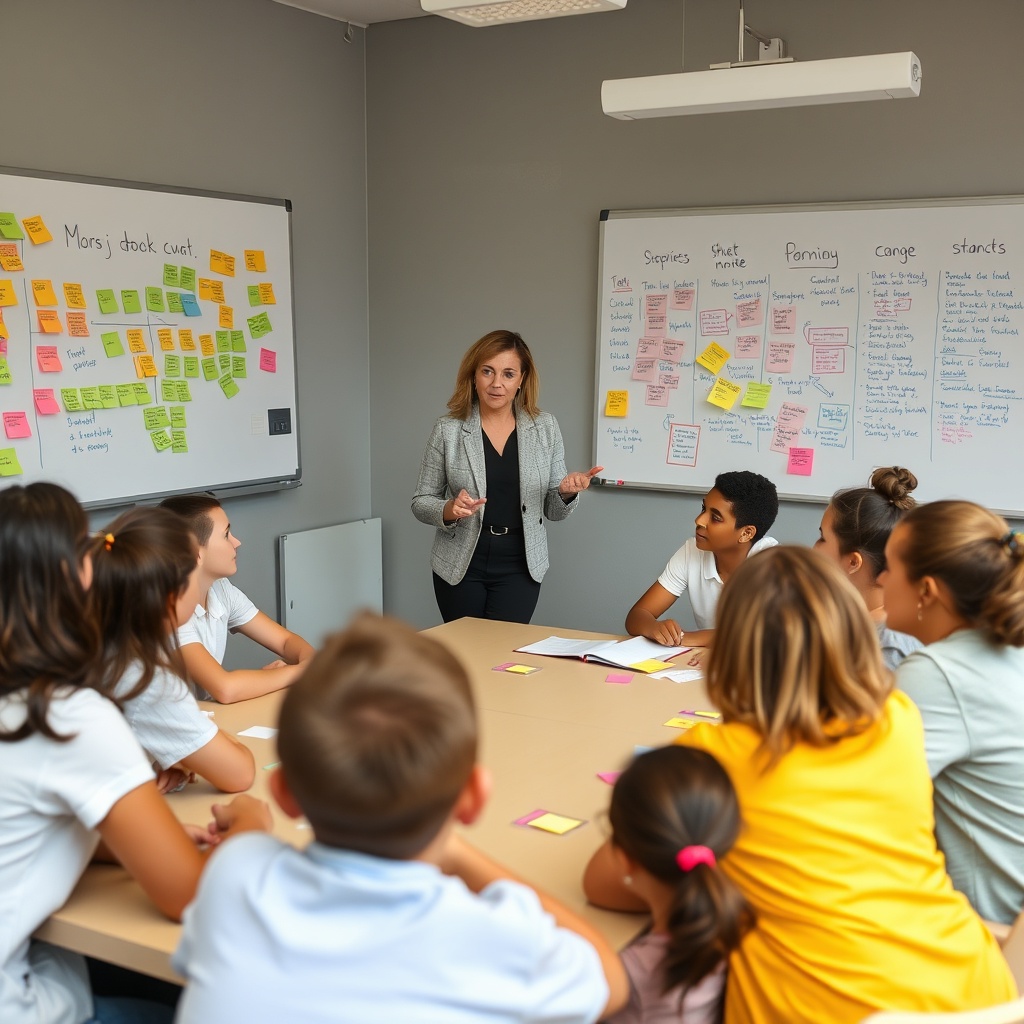
Facilitation Techniques That Spark Innovation in Classrooms
Introduction
At The Spark Collective, we believe innovation in classrooms does not begin with tools—it begins with how adults think, listen, and collaborate.
Our facilitation approach is designed to unlock the collective expertise already present in schools, helping educators move from isolated practice to shared ownership of student success.
We create spaces where ideas are not just generated—but refined, challenged, and transformed into actionable instructional shifts.
Because when facilitation is done well, it doesn’t just guide conversation—
It changes practice.
Setting the Stage
Innovation requires intention. Before meaningful collaboration can happen, the environment must be designed to support it.
We focus on:
-
Establishing clear purpose and outcomes for every session
-
Creating psychological safety so all voices are valued—not just the loudest
-
Structuring time to balance thinking, dialogue, and action
-
Using protocols that move teams beyond surface-level conversation
-
Anchoring all discussions in student outcomes and instructional impact
We don’t just “run meetings”—we design experiences that move teams forward.
Active Listening
Listening is one of the most powerful—and most underutilized—tools in educational leadership.
Our facilitation emphasizes:
-
Listening to understand, not respond
-
Surfacing patterns, gaps, and unspoken challenges
-
Naming what’s heard to build clarity and shared understanding
-
Elevating diverse perspectives to ensure equity of voice
-
Using listening as a bridge between data and human experience
When educators feel heard, they become more willing to engage, reflect, and grow.
Collaborative Problem‑Solving
Real innovation happens when teams move from identifying problems to owning solutions together.
We guide teams to:
-
Move beyond blame to root cause analysis
-
Use structured protocols to generate high-impact solutions
-
Align strategies to instructional priorities and student data
-
Define clear next steps with ownership and accountability
-
Test ideas in real time and refine based on results
We help teams shift from “What’s not working?” to
“What will we do differently—starting now?”
Reflection & Iteration
Sustainable innovation requires continuous reflection—not one-time change.
We embed:
-
Regular opportunities for individual and team reflection
-
Data-informed check-ins to measure impact and adjust course
-
“You Said / We Did” cycles to build trust and responsiveness
-
Iterative planning that treats improvement as an ongoing process
-
Leadership practices that normalize learning from both success and failure
Because innovation is not a single breakthrough—
It is a disciplined cycle of trying, learning, and refining.